Writing Panel at Sabaku Con!

My writing panel got approved for Sabaku Con 2017! My panel “Think It, Write It, Panic, Publish” is to help anyone who wants insight on the writing world!

Description: Ever think about pursuing writing as a career or a hobby? Don’t know where to start? This panel can give you the insight from the experiences of a self-published author on the world of writing novels, fan-fiction, poems, short stories. and publishing.

Anyone who is in the Albuquerque area, and attending Sabaku Con, is welcomed to come. I’ll be joined by my writing friend Asiera (you can check more about her here)! She has some unique insight into writing that I don’t so it’ll help.

The panel will be informative by the information Asiera and I provide, probably with a PowerPoint slideshow showing our experience as writers. I want it to be open to questions anyone has, because I’m sure everything can’t be answered in slides.

To attend the panel, you have to be attending the convention, so here’s a link to the membership passes: http://www.sabakucon.com/memberships/index.html. The convention is being held at the Albuquerque Marriott Pyramid North.

Hope to see some people there!

Follow me on Twitter: http://twitter.com/AuthorBrandan
Facebook: http://www.facebook.com/BrandanChapman1/
And check the main site for other blogs: https://brandanchapman.com/

A Trip Through Virtual Reality

So for anyone who knows me as the being I am, they should know that I am a writer and a gamer. I started gaming way before I started writing, but that isn’t by a huge gap. I started writing short stories about LEGO’s Bionicles in kindergarten, and had been playing video games since I was old enough to understand what was going on.

So as my 5th novel is being edited, I’ve been tossing around the ideas of the next story I will write. I was going to possibly write a story based in the TRON universe by Disney, but with recent rumors of Disney rebooting the series, I didn’t want to risk the investment. Writing a story like that could only be published by Disney Hyperion, so making it a possibly outdated story canon-wise just makes it harder.

So I’ve been tossing around the idea of writing the concept/genre of people getting stuck in video games. Several authors have done it already. Some off the top of my head are Andrew Klavan’s MindWar trilogy and John David Anderson’s Insert Coin to ContinueThough writing for different age groups, I believe this is a popular subject matter. Things like Sword Art Online wouldn’t be as popular if it wasn’t. One of my favorite series growing up was .Hack GU, where a virus in the game was causing people in real life to enter into comas. The main character, Haseo, was super cool! af212a1140143d5eafb35ebaf3200f2c0668cc7c_hq

As a gamer, I thought, what better thing to write about? Mixing fantasy and gaming, and the countless hours I’ve spent watching YouTubers game, I think I could create a pretty cool story.

Virtual Reality (or VR for short) is the hot thing right now in video games, and it might seem cliche, but it might be a great use of the bridge between the concepts of reality and gaming.  I can’t afford to buy a VR headset to test it out in person, but I have watched many let’s players on YouTube test it out. (That’s research right?).

A side note, as a gamer and fan of Disney, they are surely missing out not making the Grid Games a VR game. Just saying. discanim1

Might be writing a couple more blogs on the idea of gaming meeting writing. Figured it could be a good way to get ideas flowing for stories. It might even help some other writers out there!

Any gamers out there like to read about this concept? Or any writers currently writing this? I’d like to know how it’s going! Let me know in the comments! I’d love to know what kind of games inspire anyone out there, or even games you just like to play.

Follow me on Twitter: http://twitter.com/AuthorBrandan
Facebook: http://www.facebook.com/BrandanChapman1/
And check the main site for other blogs: https://brandanchapman.com/


Author Update

“And when he swore to bring back his love by the stories he’d create, nightmares shifted endlessly in the darkness of the lake.” – The Poet and the Muse by Poets of the Fall

So I haven’t written a piece in a while, so I figured I’d take the time to update everyone on how my writing is going.

Last I wrote a blog, I was doing NaNoWriMo 2016. Well, I won for the second year in a row, which just means I met the 50,000 word count within a month. It pumped out a lot of my current story. Congrats to anyone else who won National Novel Writing Month too!

nanowrimo_2016_webbanner_winner_congrats

Since, I haven’t written too much. Shortly after NaNo, the holidays came in a storm. It kept me pretty busy. Traveled to see some family in another state. I did take my laptop but never really got a lot of free time to sit down and write what I wanted. It was nice to spend time with family I don’t really get to see much.

Once I got back, I was planning on writing while I still had a few days before I had to go back to work. But alas, the Steam Winter Sale was going on. If anyone knows me well enough, they know I’m also a gamer. I picked up several new games and played Stardew Valley for several hours on those last few vacation days. Praise to Gaben.

steam-summer-sale

So here I am almost half way through January, and the ending still needs to be written to my current manuscript. On the plus side, I’ve been taking creative writing classes and several critiques have said that the beginning of the story is brilliant. That’s always a nice feeling.

Hopefully I’ll finish the ending soon and get into the grind that is called editing. I have an outline of several scenes that need to be revised and edited already. Don’t know how long the editing and revision stage will take, because I hope not too long before I can start looking for an agent.

I’ll probably give another update when I reach the editing stage, but until then, thanks for reading. I should get back to writing now.

Writing in Video Games

So just yesterday, I beat the game Quantum Break. It’s a Remedy Entertainment video game that does great justice to the company. Playing through the game, I realized how important writing can be for a video game. I mean, I’ve always know that for a fact (especially as a writer myself), but Remedy does storytelling so well that it really opened my eyes.

I’ve always been a sucker for lore and story in video games. I’m the kind of gamer that will read the quest dialogue in World of Warcraft, and even read the physical books based on the game. WoW is one of my favorite video games to have lore in it. I am completely enTHRALLed with the backstory of the races and the characters. It’s one of the reasons I would love to be an intern writer at Blizzard Entertainment (the company that made WoW). Fingers crossed that may actually happen one day.

Anyways, back to Quantum Break. This game has a great story. Remedy has always been great at making story-driven games that also are fun to play, like Alan Wake or Max Payne. Story-driven games are games that are usually highly dependent on the story they tell. Well, I wouldn’t say highly dependent exactly. More like the game is more centered around the story. Games like these are always catching my interest. As a writer and author, I want a compelling story. I want to be inspired. I want to feel what the characters feel.

Speaking of characters, Quantum Break nails them. There were characters that were (for the sake of giving spoilers) seemingly bad at the beginning, but then actually had redeeming qualities. There were characters I was rooting for, aside from the main character Jack Joyce, that faced just as many challenges.

One great thing about Quantum Break is that it entwines the video game aspect with TV show-like episodes at the end of each act. These episodes can change based on your decisions in the game. I wholeheartedly believe that these episodes really helped the gamer/watcher see the “behind the scenes.” From episode one, I was rooting for a character I thought was bad. At the end of episode four, I was nearly crying because of the connection the game gave me to the characters. Character development and connection are great aspects in a game.

I might be just a simple novelist and gamer, but I can always tell when the story in video games is done really well. If I feel the same thing characters feel emotionally, if I am at the edge of my seat wondering what will happen next, and if I still have a residual feeling after the game, the story and game were brilliant.

That residual feeling is something that makes me want to tell everyone to play the game for themselves. It’s something that needs to be experienced. Games like Quantum Break, or another favorite of mine, Life is Strange, should be played. So I highly recommend Quantum Break. Brilliant story, awesome characters, and the feels.

How to Self-Publish (with CreateSpace)

CreateSpace is my go to for my self-publishing needs. It was pretty easy to learn, but I figured I’d give any tips to those interested in CreateSpace. You can self-publish with CreateSpace for FREE as long as you keep your book to the basic options.

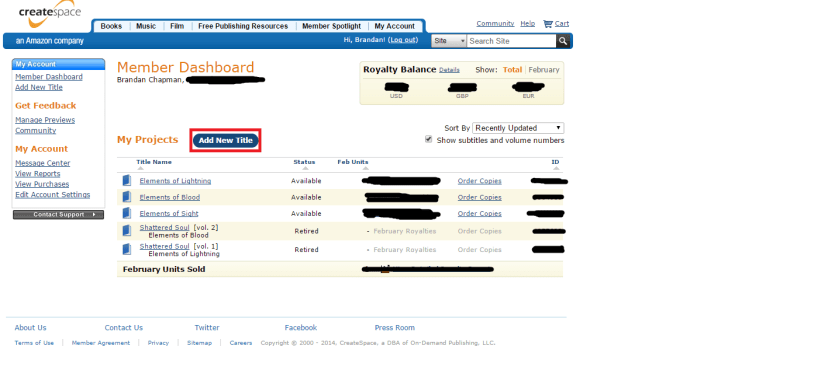
First, you’ll need to set up an account. Once you set up an account and log in, it should take you to the “Member Dashboard” where you can see all your titles and projects you’ve created in CreateSpace as well as there ID numbers and the royalties you’ve received.

dashboard

From here, you can click the “Add New Title” button. This will take you to the page where you can select what you are self-publishing, whether it be a book, CD, or DVD. As I am an author, and not creating CDs or DVDs, this will be general to creating paperback projects. You can see my 3 current books and the older editions of my first 2 listed here.

title

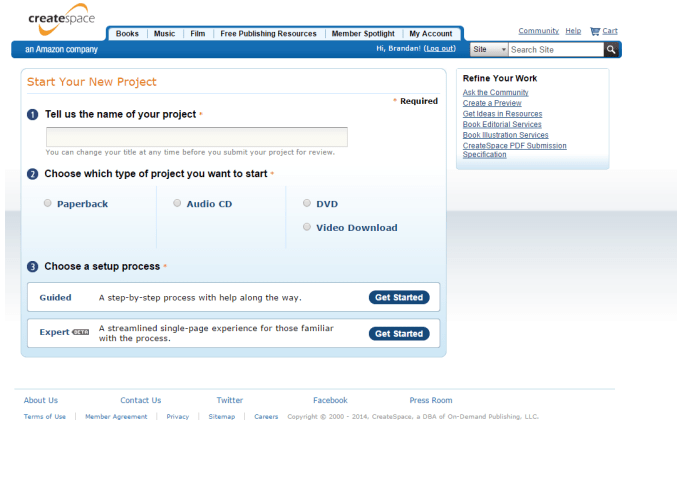
You have to name your project, most likely the book’s title, select the paperback option, and then select the guided process. There is an “expert” process that is in beta apparently, but if it’s your first time using CreateSpace, best to stick to the guided option.

title info

After it loads your new project, you’ll find yourself on the “Title Information” page under Setup for your project. Here you can add a subtitle (if you have one), the author’s name (in case you use a pen name), extra contributors (like designed by, photographs by, etc.), if the book is part of a series (which is optional), edition number, language, and finally the publication date. Each section has a “What’s This?” underneath it with more information regarding each one.

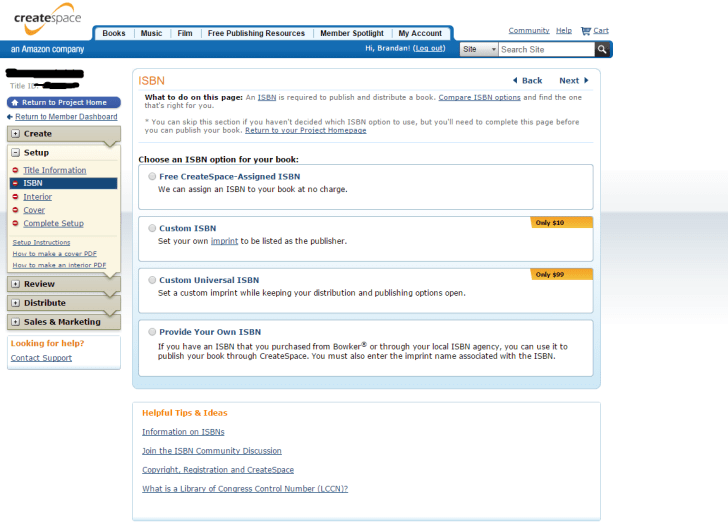
isbn

After you save and continue (after you save you can always come back to edit the project), you’ll find yourself on the ISBN page. Here you can get a free ISBN through CreateSpace or purchase a custom ISBN. You can also provide your own if you have bought one previously. There is a link to compare the ISBN options near the top.

For the next page, you’ll need your completed, edited, and formatted manuscript. I don’t have a picture for the next pages because I don’t have the required files/information to make the pages appear as they would for someone who is entering all the information in. The Interior page is where you choose the interior type (being black & white or full color), paper color (between white or cream), trim size (how large your pages and book will be), and where you submit your file. The color options are obviously going to probably cost you, I’m not actually sure, as I have only done black & white interior and white pages. There also is an option here for $199 for CreateSpace to professionally design your interior. This is NOT paying for them to EDIT. It’s to DESIGN your manuscript. Like I said before, you can get through this completely free if you know how to edit your document yourself.

Next is the cover! Here you can choose between having a glossy shiny cover, or a matte cover which is just a regular non-shiny cover. You can order samples to see what they look like but that’ll cost you. After you choose between the finish of your cover, you have three options: Build your own cover with CreateSpace’s limited cover designer, pay $399 dollars to have them design you a cover, or upload a cover-ready PDF. If you don’t have a full cover ready as a PDF, you can make your own for free. The designer is limited with fonts and templates, but it’ll get the job down if you just have like a photograph you want as your cover. If you have no picture editing skills, or can’t find someone who does, you should make your own cover with their designer. Or if you have 400 dollars. GIMP is an excellent program to use for photo editing. It’s like Photoshop but free, and pretty simple to use.

You did it! After all this you have come to the Complete Setup page. Here you review the information you have selected for your book. After everything is exactly as you want it, you submit your file(s) for review. It takes about 24 hours before they get back to you. During these 24 hours you can’t edit anything you have selected. This review is to see if your manuscript file and your cover file match up and there are no errors. If there are errors, you’ll have to fix them and resubmit and wait another 24 hours. If there isn’t any errors, then you are good to go. You can digitally proof your book (to see if there are any errors that it didn’t catch) or you can order a proof copy to read in person. You’ll have to wait if you order a copy, but if you proof it digitally, you can move on and begin the process of distributing your book.

The Distribute section is where you enter your price, your book description, what channels you want your book to be available to, and if you want to publish the book on Kindle. They are all self explanatory. To publish on Kindle, it’ll simply convert your files to eBook format and publish it that way as well. For pricing, there is a minimum price that you can set your book. Depending how long/big the book is, the higher the minimum price will be.

Hopefully this will help shed some light on the guided process of self-publishing a book through CreateSpace. There are several other self-publishing sites that you can use if CreateSpace isn’t your cup of tea, but it’s the only one I’ve used. Explore your options, but if you do decide on CreateSpace, hopefully this will help.

If you have any more questions on CreateSpace, feel free to ask me or even visit the forums.

World Building Tips

So I figured because I’ve built several worlds from the ground up in my Shattered Soul series, I would provide some tips I’ve learned from Creative Writing classes and from general writing tips I’ve received.

The first thing I’ve been told when building your own world is to not overkill the reader with information about said world. When I first started writing Elements of Lightning, I opened the book explaining everything about how the world worked and how the Elements work. That was bad. You need to pace out the world building.

Next thing that really helped me was to outline your world. There are thousands of writing outline templates you can use. My first creative writing class had one that had different boxes for setting, notable places, weather, cities, and of course the name. The teacher in that class stressed the importance of naming characters and places. The name can give life to the world.

Another thing I wish I knew early on was to draw a map. Doesn’t need to be amazing. Having the visual in front of you can help you build a world. Having the map near you as you write to reference is a great practice. You can even make revisions to it as you continue to build your world.

If you a fan of dialogue, characters are a great way to build a world. I’m a huge fan of dialogue over description. I prefer for my characters to paint the picture, rather than directly telling the reader in description.

Speaking of characters, creating an outline for your characters is another great assist in world building. Your characters have a huge part to play in the world around them.

Lastly, think of what you would do in your world. If you thought about what you would do with your characters and your world, it becomes more real to the reader.

Hope these tips help like they have me! Remember to keep writing!

Tron: Rogue, a Tron Fan Fiction

So I figured because I have a decent sized following on my DisneyTronBlog, I should write a fan fiction! I know there are tons of others who are waaaayy more knowledgeable in the Tron universe, but I’m a huge fan and have experience in sci-fi writing.

I’ve been a fan of Tron for as long as I can remember. I remember seeing the Tron movie from 1982 on my parent’s DVD shelf and thinking, “Hey, that’s Disney? It looks really cool.” Being raised on Disney movies, I had to check it out.

Best 96 minutes of my life. When Tron Legacy was announced, I was so excited to see it. Then, Tron Uprising eventually came out on Disney XD. Tron is my favourite Disney franchise.

Check out the fan fiction here at FanFiction.net. Codex_char_legacy_Black_Guard
Check out my YouTube for Tron video games here669db45972dd33d29e7b789492294fff
Check out my Tumblr here.

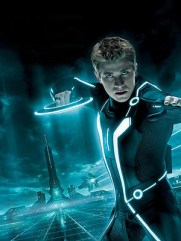
Normal_TRON_GHedlund

Shattered Soul series continues with Elements of Sight!

My third book is out now! My Shattered Soul series continues with Elements of Sight, the story following Saocre.

“The Shattered Soul series continues with Saocre. They were out there. The Dark Elementalists were out there and looking for Saocre. Did Ace Venx fail? Was he dead? Saocre knew it didn’t matter now. All that mattered was he had to protect his home planet, Rentac, from the Dark Elementalists.”

You can get the book in paperback and ebook from Amazon and Createspace.

Like the 2nd book, Elements of Blood, it can be read before the first one with little to no confusion. For the easiest reading experience, I do recommend first reading Elements of Lightning.

All three of my books so far are set in the same universe, but about different characters in relation Ace Venx from Elements of Lightning.

NaNo 2015 Winner and Progress Update

So in October I had just finished my 3rd novel, Element of Sight and its first edits. Then along came November, where I remembered it was National Novel Writing Month.

In my determination to finally participate, I immediately began my 4th novel to the Shattered Soul series, Elements of Light. On the 28th, I completed NaNo’s 50k word goal and my 4th novel. *applause* *cheers*

So now at the beginning of December, I’m back to the final edits of Elements of Sight. Hoping my 3rd fantasy novel will be out by the end of the year. The edits to Elements of Light will soon follow, and hopefully I will have that out by the end of January or February at least.

Seeing that it is possible to write a novel in a month’s time, I have never felt more like a writer. I have several more books planned for 2016, including a possible second series in the same universe as the Shattered Soul series, with brand new Elements and characters.

As a self published author and a college student (working a day job), I feel I need to use my free time to bump out more than just 1 or two books a year, like I have been doing. Elements of Lightning came out January of 2014 and Elements of Blood came out in December that same year. My 3rd book took until October because I was still unsure if I should continue my series as a self published writer and try to write something that I could send to agents/publishers. Maybe I’m impatient or read too many articles that are “pro-selfpublishing,” but I decided against it and began to finish EoS.

So now I have completed a book series. Not originally as planned (I was maybe aiming for 6 or 7 books), but it needed to be finished. It feels good to have more than just one or two now. Hoping the more I write, the more chance I’ll finally get the readers I dream for.

How much is a writer really worth?

Found this post on Tumblr here. This is NOT mine. Simply sharing it. Follow my personal Tumblr here. You can get my sci-fi and fantasy books at Amazon.

Tough question, and one with many possible answers. Some writers (sadly, a very few) earn a good living from writing alone. However, to assume that all writers can make a decent living from writing is to assume that all actors are rich, based on a handful of Hollywood stars. We all know that most actors are “resting” ninety percent of the time, or taking unpaid acting jobs, or otherwise earning money doing something completely different (teaching; waiting at tables; helping out with stage lighting).

What many people don’t realize is that writers are in much the same boat.

In the UK, the “average” writer (if there can be said to be such a thing) earns about £5000 a year from writing alone. Of course, some earn much more than that; others, much less. There are many variables; and, as the following article points out, just because a writer is well-known and critically well-received, it does not therefore follow that he or she will be equally well-paid – or in some cases, paid at all.

http://www.theguardian.com/books/2014/mar/02/bestseller-novel-to-bust-author-life

http://www.prospects.ac.uk/writer_salary.htm

Most writers, like actors, supplement their writing income with teaching, running masterclasses, secondary jobs and so on – a sensible course of action, if writing alone doesn’t pay the rent. Artists do not – should not -expect to be subsidized. However, where people make money from artists’ work, then those artists should be expected to benefit. For too long now, writers have accepted to attend festivals, to do readings, signings and workshops for free (sometimes without even being paid travel expenses), simply because they feel that they have no choice in the matter.

I say they do, and this is why.

People are seldom grateful for unpaid work.

Everybody likes getting free stuff, but when it comes to allocating value, we generally assume that what comes free isn’t worth much. That’s why marketing people love to tell us the cost of their freebies: Buy this magazine, and get a free bottle of nail polish, worth 7.99! But how much is an author worth, if alltheir appearances are unpaid? Answer: a big fat nothing.

It isn’t the job of an author to subsidize festivals and book events.

Yes, festivals are an important part of the world of literature; valuable to readers and writers alike. And yes, some festivals do find it hard to make a reasonable profit. The ones that do well have sponsors to help keep them running. Some benefit from Lottery funding, or offer free advertising to local businesses in return for sponsorship. Some festivals charge high prices for tickets to author events – and of course, the public tends to assume that a cut will go to the author. In most cases, however, it doesn’t. Most festivals do not pay a fee (except for Hay-on-Wye, which pays exorbitant fees to a handful of celebrities, and to no-one else); and a growing number don’t even pay their contributors’ travel expenses. I’ve recently heard of a few UK festivals that actually charge authors for the right to attend, on the assumption that we should be grateful for any exposure we can get…

Take a moment, if you will, to apply this to any other service.

In my local restaurant, having finished a meal, I call the head waiter over and say: “Now if you’ll just slip me a tenner, I’ll tear up this bill and go right out and tell all my friends what a great place you have here. It’ll be worth it for all the goodwill.”

Really?

No. I don’t think so, either.

Of course, there are instances when we choose to work for free, such as, in the case of a charity. However, where working free is the norm, we end up devaluing our own work, and that of the whole profession. Working for free costs us time, effort and expertise; things that others get paid for. We would not expect a teacher, a lawyer, a  plumber, a chef, to regularly give their services for free. Their time and expertise is considered worth paying for. So is ours.

Festivals never question the fact that they have to pay for room hire; catering; advertising; transport; photography; insurance; sound and lighting. All these things cost money. Everything has to be paid for, in fact, except the people whom the audiences are coming to hear – that is, the authors themselves.

But… I hear some people saying: Aren’t these authors getting free publicity that will help them sell their book?

Excellent question. Well, yes… and no. For a start, there’s no such thing as free publicity. Someone, somewhere, always ends up paying for it. By working for free, we’re basically accepting to do another person’s job (in this case, a publicist’s) as well as our own. And in the case of festivals who don’t even offer expenses, we’re effectively paying for the right to do that extra work for free, too.

As for book sales, just take a moment to work out how many sales you’d need to make in order to pay your expenses. On average, your travel costs would be between £60-100, travelling second class by train. Let’s forget about meals, taxis, sundries (or indeed, the overnight stay that some festivals entail) . So. Let’s call it £80.

Right. The following article gives you some idea of how much in royalties you’d expect to earn from the sale of your book. Have a good look. It’s worth reading.

http://blog.celandor.co.uk/?p=75

However; for simplicity’s sake, let’s call it 10% of a full net price of £8.00 for a paperback. (That’s very generous, actually.) For the moment let’s forget about the percentage that would have to go to the tax-man, to your agent, and so on. Let’s call it 80p. Kerrrr-ching.

That means, that to break even, you’d have to sell 100 copies or more of your book at your festival event. Yes, some writers can do that. But it’s a big assumption. On a good day, you can reasonably expect about one in ten festival-goers to buy a copy of your book after a reading; that means selling at least 1000 tickets, just to break even.

Seriously, how often does that happen?

And that’s why authors are worth more than this. That’s why they shouldn’t work for free. It’s wrong; it’s unfair; and even if we could all afford it (I can; I’m one of the lucky ones who doesn’t have to worry too much about breaking even); if we don’t respect ourselves and value the work we do, then how the hell can we expect to receive respect from anyone else?